
Product7 min read
The best Splitwise alternatives in 2026
Almost everyone arrives here for the same reason: the free plan stopped letting them add expenses. Here is what actually replaces it, depending on what your group is tracking.
Jonas M. ·
Product, Expenso
Product contributor to Expenso’s splitting tools
Jonas works on the part of Expenso that decides who owes what. He writes about the mechanics of shared money — why simplified debts work, where splitting rules break down, and what actually changes when a bill repeats every month.
Almost everyone arrives here for the same reason: the free plan stopped letting them add expenses. Here is what actually replaces it, depending on what your group is tracking.

Ten people owing ten people collapses into four payments. Here is the arithmetic, and the one case where you should switch it off.

Publish the per-person number before anyone books anything. Every other problem with these trips descends from skipping that step.

The organiser almost always ends up subsidising the collection. Two decisions, made in the first message, prevent it.

One person’s card, five people’s logins, and a monthly total nobody has looked at since the year it started.

The fuel maths takes thirty seconds. The part groups get wrong is what the car itself is worth.
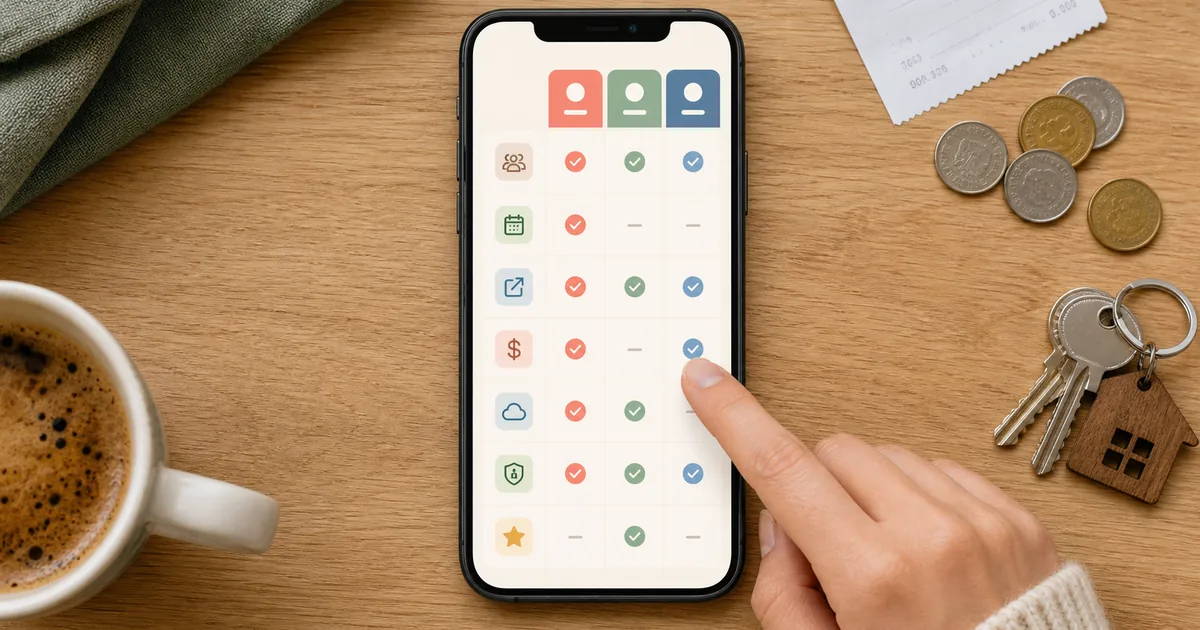
Seven things to check before you move a household’s money history into a new app.

Equal, by item, or somewhere in between — and where the tax and tip actually belong.

Both apps track shared expenses and simplify who owes who. The difference shows up in what a household pays for, and in how many expenses the free plan lets you log.

Internet, power, water and the bills nobody remembers until they arrive.

Scripts that keep the money conversation from costing you the friendship.
Free to start, with unlimited expenses and unlimited members. Works on iPhone, Android and the web.